
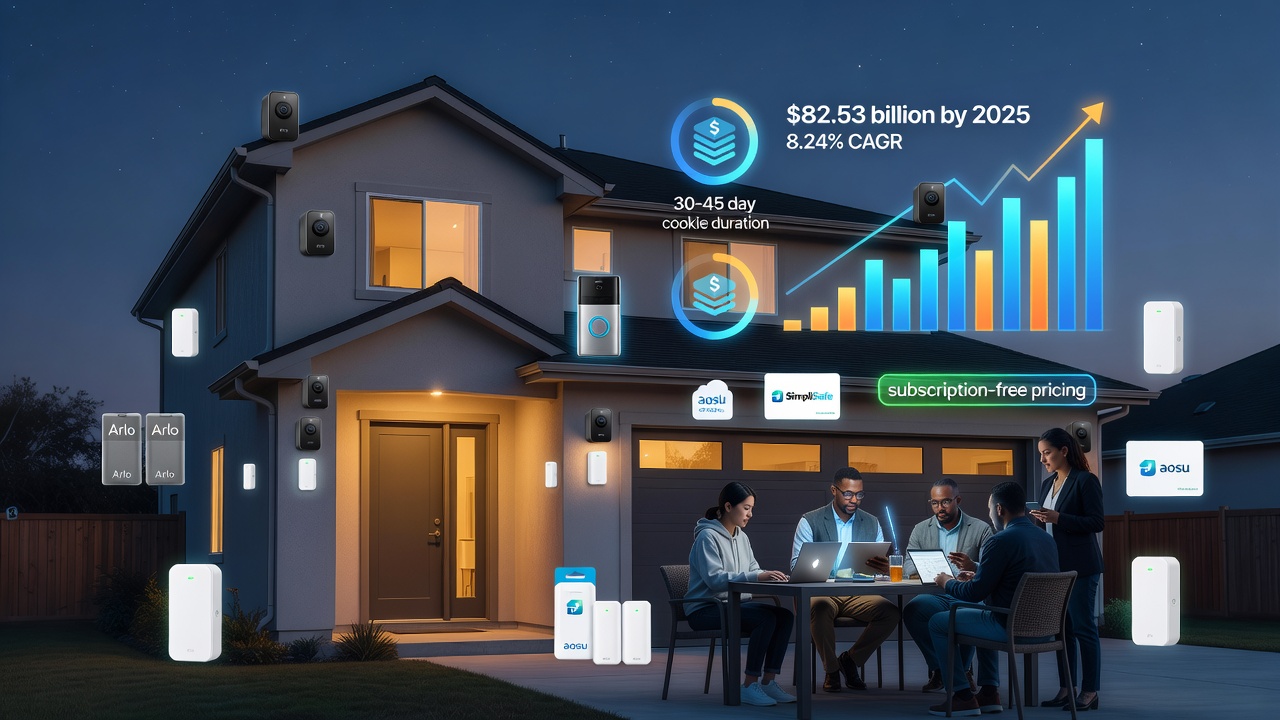
The global home security market is on track to reach $82.53 billion by 2025, expanding at a compound annual growth rate of 8.24% between 2020 and 2025, according to Grand View Research. That trajectory has turned a once-niche hardware category into a competitive consumer electronics battleground, and it has quietly created a parallel opportunity: a growing ecosystem of affiliate programs built around cameras, video doorbells, and smart sensors.
Why Home Security Became an Affiliate Marketing Category
Home security products sit at an unusual intersection of consumer safety, convenience technology, and recurring purchase cycles. Unlike one-off gadget purchases, security systems often lead to repeat spending - additional cameras, replacement batteries, storage upgrades - which makes the category attractive to brands building long-term customer relationships. That same dynamic makes it attractive to affiliate marketers, since many of these companies pay commissions not just on an initial sale but across a product ecosystem that customers tend to expand over time.
The shift toward subscription-free or subscription-optional business models has also changed the competitive landscape. Where early smart camera brands relied heavily on monthly cloud-storage fees, newer entrants are competing on upfront value: local storage, AI-based alerts, and multi-camera support without mandatory recurring costs. This matters for affiliates because transparent, one-time pricing tends to convert more predictably than products bundled with ongoing subscription commitments that consumers must evaluate separately.
What Affiliates Should Evaluate Before Promoting a Brand
Commission rate alone is a poor indicator of program quality. A responsible evaluation should weigh several factors together, since a high headline commission can be offset by a low average order value, a short cookie window, or strict approval requirements that limit who can actually join.
- Commission structure: flat per-sale payouts versus percentage-based rates, and how that interacts with average order value.
- Cookie duration: windows across the market analyzed here range roughly from 30 to 45 days, directly affecting how long a referral remains attributable.
- Approval requirements: some programs are open to most applicants, while others vet publishers more closely to protect brand reputation.
- Payout thresholds and frequency: smaller publishers should confirm minimum payout amounts before committing significant promotional effort.
- Product credibility: sales performance, market share data, and independent reviews matter more than promotional claims from the brand itself.
Market Signals Worth Watching
Sales data cited from Amazon, excluding Amazon's own private-label products, shows some challenger brands - such as aosu - gaining meaningful share in specific regional markets, including a reported No.1 position in Canada and top-five standing in the EU among non-Amazon brands. Figures like these, when drawn from marketplace data rather than company self-reporting, offer a useful proxy for real consumer demand, though affiliates should treat any single data point as one input rather than a complete picture of brand strength.
Established players such as Arlo and SimpliSafe continue to compete on brand recognition and flexible, contract-free packages, while a wave of newer entrants compete on price, image quality, and subscription-free functionality. For affiliates, this diversification means more choice, but it also means more diligence is required to separate durable, well-reviewed products from brands riding short-term promotional spend.
Consumer Trust Still Drives Long-Term Performance
Security products carry a different trust burden than most consumer electronics, because customers are placing their physical safety and personal footage in a company's hands. Affiliates who build audiences around this category have a responsibility to prioritize accuracy over inflated claims - overstating detection accuracy, battery life, or storage capabilities can damage both the brand relationship and the publisher's own credibility with readers. Programs that pair competitive commissions with genuinely reliable hardware tend to produce better long-term conversion rates than those relying purely on aggressive payout structures, since repeat purchases and positive word-of-mouth ultimately depend on the product performing as advertised.