
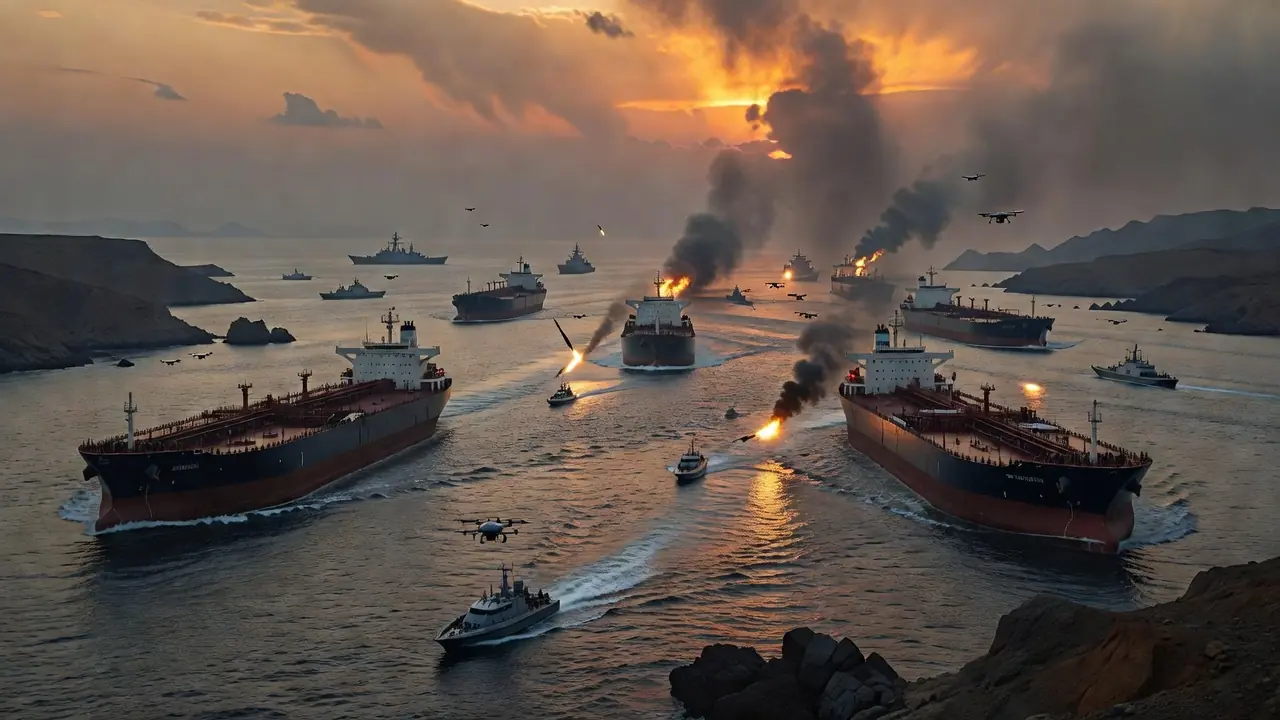
A critical artery for global oil and trade is under sustained, low-visibility attack. According to confidential data cited by The New York Times, Iranian forces have been launching near-daily drone and anti-ship missile strikes against commercial vessels passing through the Strait of Hormuz, with the frequency reportedly reaching dozens of incidents each week. The Islamic Revolutionary Guard Corps has now appeared to acknowledge these operations, even as the scale and intent behind them remain deliberately obscured.
A Waterway Under Constant Pressure
The Strait of Hormuz is one of the most consequential chokepoints in the global economy, carrying a substantial share of the world's seaborne oil. Any disruption there ripples through energy markets, insurance pricing, and shipping schedules worldwide. What makes the reported pattern of attacks notable is not a single dramatic event, but persistence: a steady drip of incidents that keeps commercial operators, insurers, and naval planners on constant alert without triggering the kind of large-scale confrontation that would dominate headlines for weeks.
This approach fits a familiar pattern of calibrated pressure - actions significant enough to raise costs and risk perceptions, but structured to avoid crossing a threshold that would force a full military response. For shipping companies, the practical effect is the same regardless of the strategic calculus behind it: elevated insurance premiums, rerouted vessels, and crews operating under heightened threat awareness.
Washington's Calculated Restraint
U.S. forces continue to escort vessels through the region, a visible but limited form of deterrence. Notably, Washington has largely avoided direct retaliatory strikes, suggesting a preference for containment over escalation. This restraint reflects the broader difficulty of responding to diffuse, hard-to-attribute incidents in a confined maritime space where military action carries outsized risk of miscalculation.
The IRGC's apparent acknowledgment of the operations is itself a signal. Ambiguity has long been a tool in this theater - deniable attacks allow all sides room to avoid formal escalation. A shift toward open acknowledgment, even partial, changes the diplomatic calculus and raises the stakes for how long restraint can hold.
Markets Absorb Risk, For Now
Despite the reported frequency of attacks, oil exports from the region have recovered, indicating that markets and shipping operators have, to a degree, adapted to the elevated threat environment. Analysts nonetheless continue to describe the strait as highly dangerous, a characterization that matters beyond the immediate security picture.
- Insurance and freight costs tend to reflect perceived risk long before any single catastrophic event occurs.
- Shipping companies must weigh route changes against the strait's unavoidable role as a global oil transit point.
- Sustained low-level conflict can normalize risk in ways that delay, rather than prevent, a serious market shock.
Why the Pattern Matters Beyond the Region
The gap between reported attack frequency and market resilience illustrates how global energy infrastructure can absorb chronic instability up to a point. But that absorption capacity is not limitless. A single miscalculated strike, an attack on a tanker from a major importing nation, or an escalation in U.S. posture could shift the situation from manageable friction to acute crisis. For now, the strait remains a case study in how modern conflict can operate just below the threshold of open war, with consequences felt quietly by global trade long before they appear as a single dramatic headline.