
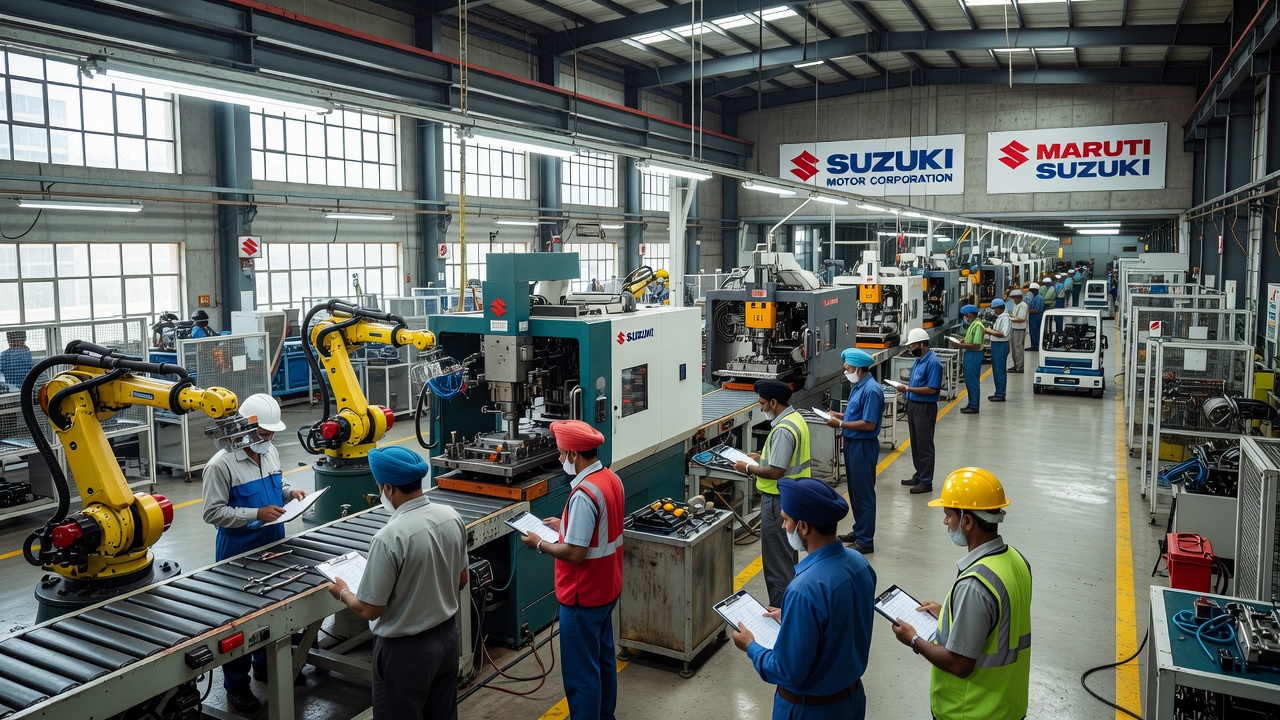
Suzuki Motor has told component suppliers in India to shut down production for one full day each week so machinery can be properly serviced, according to two people familiar with the matter. The directive, issued for the first time to the company's Indian supply base, is designed to head off unplanned breakdowns and quality lapses as the automaker prepares for a sharp increase in output over the coming years.
The move lands as Maruti Suzuki, Suzuki's Indian unit and the country's largest carmaker, works toward lifting annual production to 4 million vehicles by 2030, up from roughly 2.4 million currently. Maruti Suzuki did not respond to a request for comment.
Why Suzuki Is Rethinking the Supply Chain Now
India has become central to Suzuki's global strategy, serving not just as its largest market but increasingly as a manufacturing hub feeding exports to Japan, Europe and the Middle East. That dual role raises the stakes on reliability. A factory accident or a string of unscheduled stoppages at a supplier doesn't just dent output domestically - it ripples through export commitments as well.
Suzuki Motor President Toshihiro Suzuki reportedly met with Indian suppliers in August and asked them to plan capacity around a six-day production week rather than the seven-day schedules many currently run. Maruti Suzuki has since asked suppliers to formally declare, by year-end, that their component lines are not operating continuously throughout the week. The target model, according to the people cited, is 20 hours of operation across six days, leaving four hours of nightly downtime plus one full day for upkeep - to be in place by September 2027.
A Costly Shift for an Industry Built on Continuous Output
Indian component manufacturers have traditionally run equipment around the clock, seven days a week, to squeeze maximum utilisation out of their machinery and protect margins. Asking them to idle a line for an entire day is not a minor operational tweak - it effectively removes a chunk of existing capacity at a moment when demand is climbing, not easing.
Overall domestic car sales in India are on track to reach around 5 million vehicles in 2026, up from about 3 million in 2019, meaning suppliers are already stretched. Complying with Suzuki's request will likely require fresh investment in additional plant and machinery to offset the lost production time, one of the people said. That investment comes just as commodity and raw material costs have been climbing, squeezing supplier margins from both directions.
What's at Stake for Maruti Suzuki's Market Position
The timing is not incidental. Maruti Suzuki has ceded ground in India's competitive car market as domestic rivals such as Tata Motors and Mahindra & Mahindra have rolled out feature-rich models at a rapid clip. Maruti is lining up a wave of new launches ahead of 2030 to win back share, and that strategy depends on the company's ability to scale production without compromising build quality.
Suzuki is also preparing to introduce new powertrain and safety technology in India and aims to cut vehicle development lead times in half while sharpening manufacturing efficiency by the end of the decade. A supply base prone to breakdowns or inconsistent output would undercut all of that. Export ambitions add further pressure: shipments from India to markets including Japan, Europe and the Middle East are expected to approach half a million units in 2026, meaning any disruption at the supplier level now carries international consequences, not just domestic ones.
- Suzuki wants a 20-hour, six-day operating model for suppliers by September 2027
- Maruti Suzuki targets 4 million units of annual production by 2030, up from about 2.4 million
- Indian suppliers currently favour continuous seven-day operation to maximise output
- Rising raw material costs make added capacity investment more burdensome for suppliers