
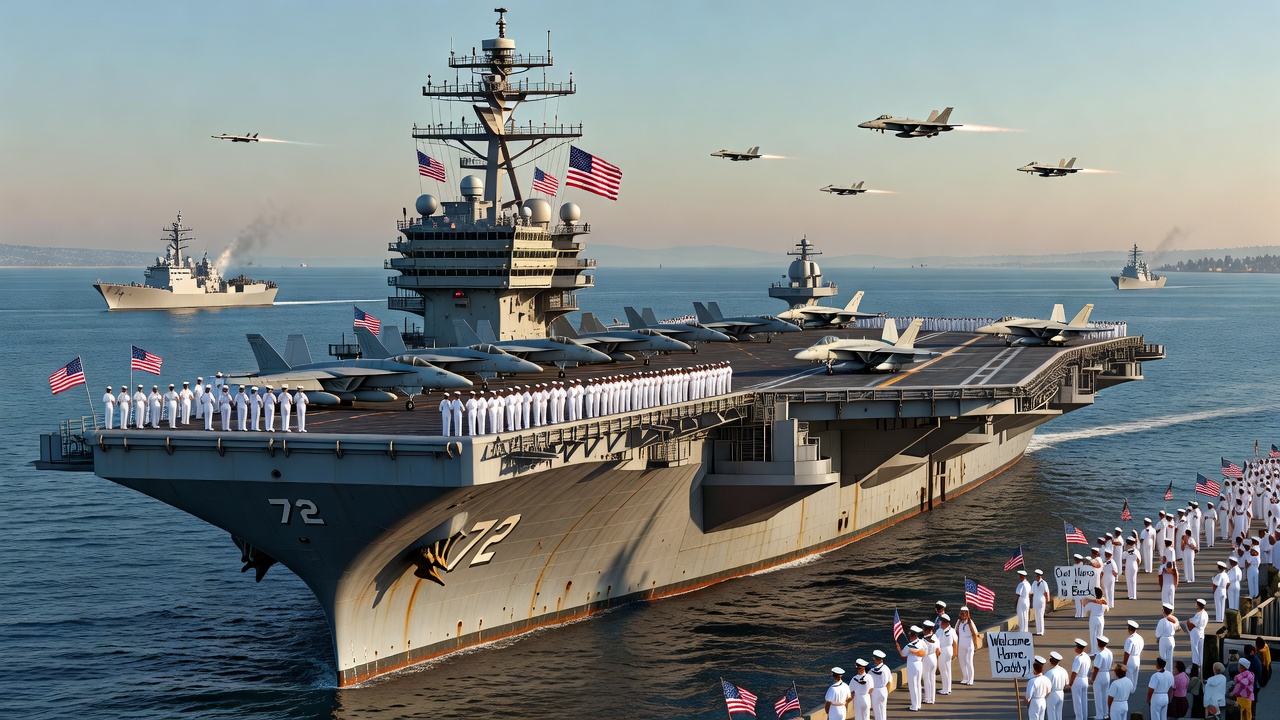
The USS Abraham Lincoln pulled into San Diego after nearly ten months at sea, closing out one of the most demanding carrier deployments in recent memory. The carrier strike group spent more than 260 consecutive days without a single port call, a stretch the Pentagon has flagged as extraordinary even by the standards of modern naval operations. The homecoming marks the end of a mission defined by sustained combat activity in support of U.S. operations against Iran.
A Deployment Measured in Sorties and Missiles
Defense Secretary Pete Hegseth detailed the scope of the carrier's work: thousands of combat sorties flown and hundreds of Tomahawk missile launches carried out during the mission. Numbers of that scale point to a strike group operating at a sustained operational tempo rather than a standard patrol rotation. Carrier deployments typically run six to seven months; this one stretched well beyond that window, reflecting the demands of an active regional conflict rather than routine presence operations.
Extended deployments of this kind are not simply a matter of ships staying at sea longer. They require continuous resupply at sea, extended maintenance planning, and a strike group able to sustain high-intensity operations without the normal reset that a port visit provides. Crews work, eat, sleep and stand watch in the same confined environment for months on end, with no opportunity to step off the ship.
The Human Cost of Prolonged Operations
The Navy disclosed eight suicide attempts among sailors in the carrier strike group over the course of the deployment. That figure, reported alongside the operational details of the mission, underscores a reality the military has increasingly had to confront: the psychological toll of extended time away from home, compounded by the stress of active combat operations, is measurable and serious.
Military mental health has drawn sustained attention in recent years, and incidents during deployments of this length tend to intensify scrutiny of onboard support resources, watch rotations, and communication access for sailors trying to stay connected with families thousands of miles away. A deployment stretching past 260 days without a port call removes the periodic decompression that shore leave normally provides, leaving crews reliant entirely on shipboard resources for morale and mental health support.
What Happens After the Return
Reunions in San Diego mark the formal end of the deployment, but the broader context does not resolve as quickly. The U.S.-Iran standoff that drove this mission continues to shape regional security calculations and has visible effects on global energy markets, where tension in the Gulf routinely feeds into oil price volatility. Carrier presence in the region remains a tool of deterrence, and another strike group will likely be tasked with sustaining that presence even as the Lincoln's crew stands down.
For the Navy, deployments of this length raise longer-term questions about force readiness: how often ships and sailors can be pushed past standard rotation lengths before maintenance backlogs, retention problems, and mental health strain begin to compound. Those are institutional questions that will likely shape decisions long after the Lincoln's crew has settled back into life on shore.