
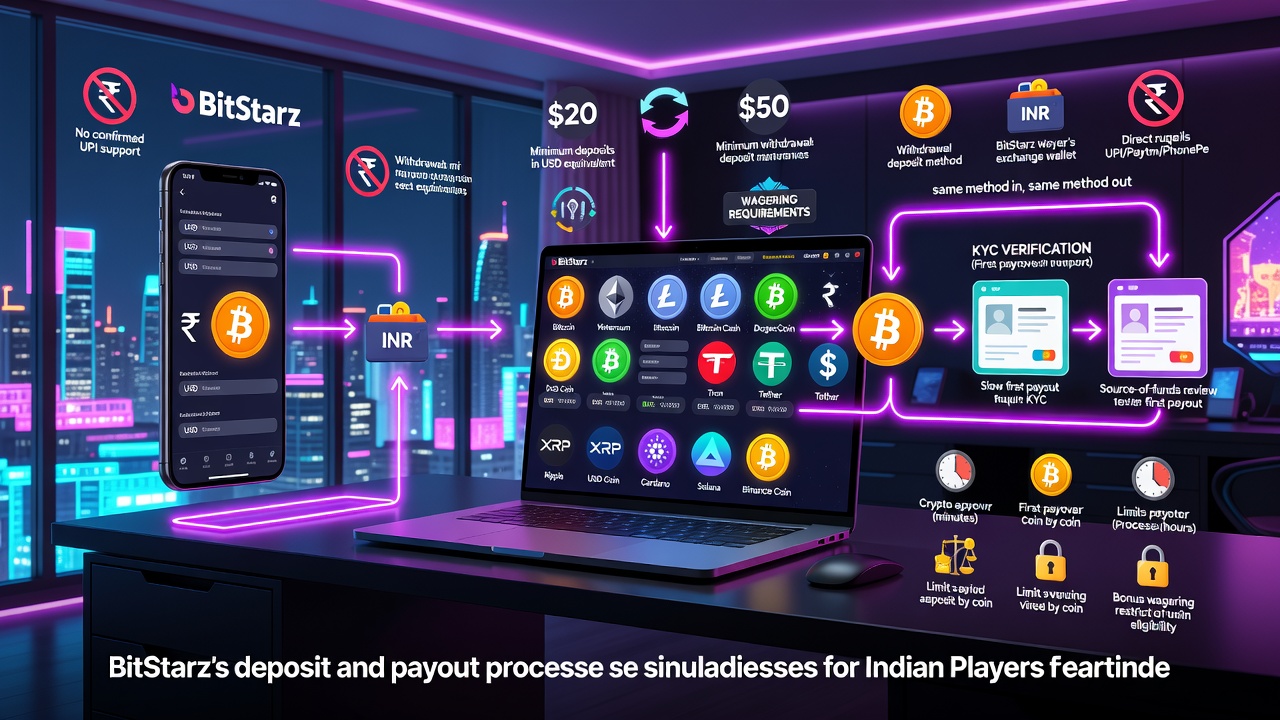
For an Indian player accustomed to rupee-based casino cashiers, BitStarz operates on a different logic entirely. There is no direct INR deposit line, no UPI button, no Paytm integration visible anywhere on the platform. Instead, balances, bonuses and transaction limits are denominated in USD, EUR or cryptocurrency - which means the funding journey for an Indian user actually starts on a domestic crypto exchange, not inside the casino itself.
A Crypto-Led Cashier, Not a Fiat One With Extras
BitStarz's payment architecture is built around digital assets first, with card and e-wallet rails added where regional payment partners support them. The coin list reviewed for this guide included Bitcoin, Ethereum, Litecoin, Bitcoin Cash, Dogecoin, Tron, Tether, USD Coin, Ripple, Cardano, Solana and Binance Coin - a broader spread than most fiat-only operators carry, though crypto casinos routinely add and remove supported coins, so the live cashier is the only reliable reference at the moment of depositing. For an Indian player, the practical implication is that funding an account means buying crypto in INR on a local exchange first, then transferring it - there is no evidence of a route that takes rupees directly into the BitStarz balance.
The Rule That Shapes Every Withdrawal: Same Method In, Same Method Out
BitStarz generally requires payouts to leave through the same channel used to deposit. Fund the account in Bitcoin, and the withdrawal comes back in Bitcoin - not a bank transfer, not a card refund. This is standard practice among crypto-first operators and exists largely for anti-fraud and anti-money-laundering reasons, but it has a direct consequence for Indian users: the withdrawal menu on any account is only ever a subset of what was used to deposit, not the operator's full payment list. Anyone depositing crypto should expect to receive crypto back, then convert it to INR separately through an exchange.
Verification, Timing and Where Delays Actually Come From
A first withdrawal at BitStarz goes through identity verification - standard ID checks and, for crypto, sometimes a source-of-funds review. That step is what typically slows a first payout, not banking infrastructure. Once an account has cleared KYC, crypto withdrawals tend to move quickly, often within minutes to a few hours of approval, with the remaining wait determined by blockchain network confirmation times rather than anything the casino controls. Card and e-wallet withdrawals, where available, generally take longer and are bound by the payment provider's own processing schedule. Minimum withdrawal amounts cluster around the $50 equivalent across most methods, while maximum limits vary more significantly by coin, verification tier and account history - figures worth confirming directly in the cashier rather than assuming from general guidance.
What This Means in Practice
Deposits carry a commonly cited minimum of around $20 or its crypto equivalent, which also aligns with the threshold attached to the platform's current welcome offer. Bonus funds and free spin winnings carry a wagering requirement before withdrawal, and any payout request submitted while that requirement is still open can be held or affect the bonus balance itself - a detail worth checking before, not after, requesting funds. The broader lesson for Indian players is procedural rather than financial: understanding the deposit-withdrawal symmetry, the KYC timing, and the absence of rupee rails matters more here than chasing a specific bonus figure, since it determines whether money gets in and out smoothly at all.
- No confirmed UPI, Paytm or PhonePe support - INR must be converted to crypto beforehand.
- Withdrawals generally mirror the deposit method used.
- First payouts require KYC verification, adding processing time.
- Minimum and maximum limits vary by coin and account status - reconfirm in the live cashier.
- Wagering requirements on bonus funds can delay or restrict withdrawal eligibility.