
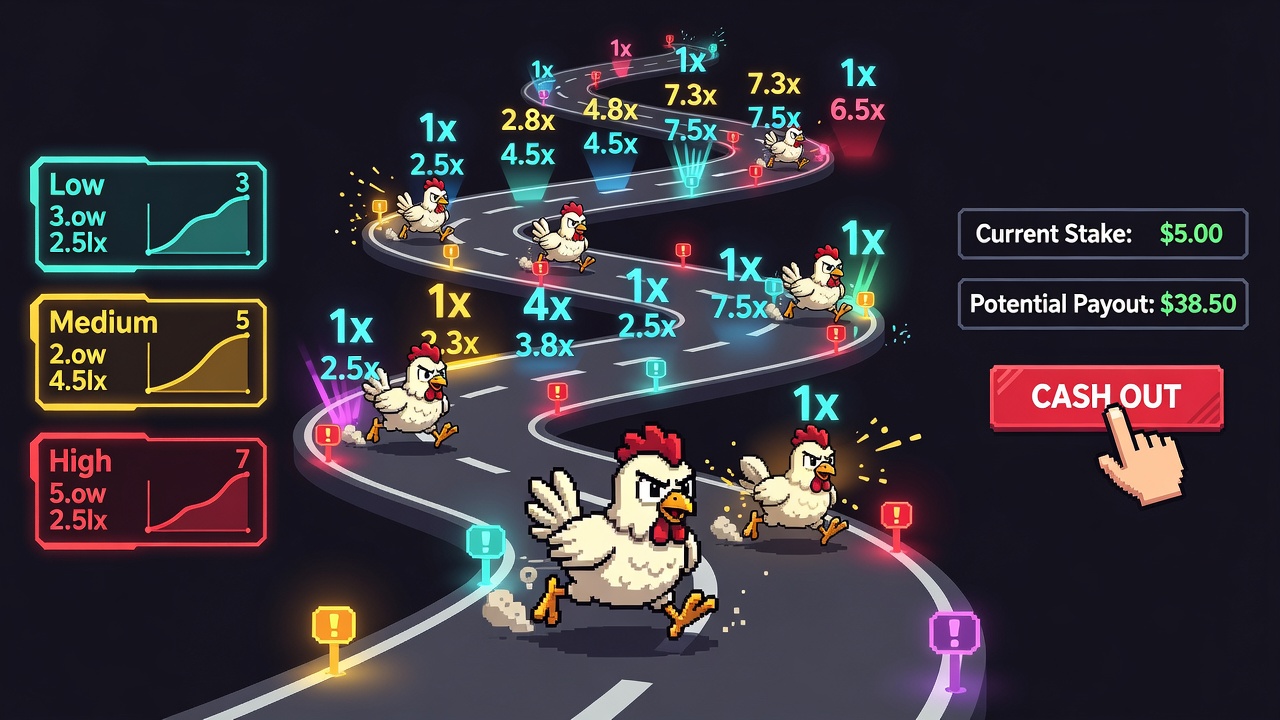
A chicken that refuses to cross the road in a straight line has become one of the more compelling premises in casual online gaming. That sounds absurd until you watch the multiplier climb with every step forward and realize your thumb is hovering over the cash-out button, torn between greed and self-preservation. That tension is the entire point, and it explains why so many players keep coming back for another round after swearing the last one was their final attempt.
What makes the sequel worth examining is how it refines a formula that already worked. The original built a loyal following on simple risk-reward mechanics, and the follow-up sharpens the visuals, adjusts the pacing, and introduces subtle changes to how risk scales across a session. Anyone curious enough to try the chicken road 2 game will notice within the first few rounds that the rhythm feels tighter, the decisions feel weightier, and the margin between a smart cash-out and a costly mistake has narrowed. That shift in feel is not accidental - it is a deliberate design choice meant to keep engagement high without making the game feel unfair.
This piece breaks down how the game actually works, what separates a disciplined player from a reckless one, and how the level structure influences the decisions you make on every single crossing. Whether you're brand new to the format or looking to sharpen an existing approach, the goal here is practical clarity rather than vague encouragement.
What Is Chicken Road 2 and How Does It Work
Chicken Road 2 belongs to a category of games often described as "crash" or "runner" style betting mechanics, where a character - in this case, a chicken - advances across a series of lanes or checkpoints, with each successful step increasing a multiplier applied to the player's stake. The core tension is straightforward: keep moving and the potential payout grows, but stop too late and a poorly timed step can wipe out the entire round.
Core Mechanics Explained
The chicken road 2 gameplay loop is built around a single repeated decision: advance or cash out. Each lane crossed raises the multiplier attached to your wager, and the game uses a randomized underlying system to determine whether a given step succeeds or fails. There's no pattern to memorize because the outcome of each step is independent, which means past results have no bearing on what comes next.
The Role of Random Outcomes
Because outcomes are generated independently for each step, no strategy can guarantee a win. What players can control is exposure - how much they wager, how far they push their luck, and when they decide enough is enough. Understanding this distinction between controllable and uncontrollable factors is the foundation for everything else discussed in this article.
Why the Sequel Feels Different from the Original
Long-time players of the first title often notice that the sequel introduces finer multiplier increments and a slightly different visual pacing that makes each decision point feel more deliberate. The chicken road 2 online game format also tends to display more granular feedback after each round, giving players a clearer sense of how close they came to a bigger payout or an early loss.
How to Play the Online Game Step by Step
Getting started requires no special equipment beyond a browser and an account with a platform that hosts the title. The process is intentionally simple, since the game is designed for quick sessions rather than lengthy setup.
Setting Up Your First Round
Before the chicken begins moving, players set their wager amount and, in most versions, select a risk tier that determines how many lanes exist and how steep the multiplier curve is. A lower risk tier usually means smaller multiplier jumps but a higher chance of surviving each step; a higher tier does the opposite.
Reading the Interface
The screen typically displays the current multiplier, the potential payout based on your stake, and a visual representation of the lanes ahead. Paying attention to this interface matters more than it seems - many losses come not from bad luck but from misreading how much is actually at stake before pressing forward.
Making the Advance-or-Cash-Out Decision
This is the heart of the experience. Every step forward is a fresh choice, uninfluenced by previous rounds. Players who treat each decision as an isolated event, rather than chasing losses or assuming a "hot streak," tend to have more consistent results over time.
- Choose your wager before starting the round, not mid-sequence
- Select a risk tier that matches your comfort with volatility
- Watch the multiplier and payout figures after every successful step
- Decide in advance at what multiplier you plan to cash out
Chicken Road 2 Gameplay Mechanics in Detail
Beyond the basic advance-or-stop loop, several underlying mechanics shape how sessions unfold and how much control players genuinely have.
Multiplier Progression
The multiplier doesn't grow at a flat rate. Early steps tend to offer smaller increases, while later steps in a round offer disproportionately larger jumps, reflecting the increased risk of the character failing to complete them. This curve is what makes the decision to keep going or stop so psychologically loaded near the middle and late stages of a run.
Risk Tiers and Their Trade-offs
Most versions of the game offer multiple difficulty settings, often labeled by risk level. Higher difficulty settings compress the number of lanes but inflate the multiplier growth per step, while lower settings stretch the journey out with gentler, more forgiving increases. Choosing the right tier is less about preference and more about matching your bankroll and patience to the volatility you're signing up for.
Session Pacing and Round Length
Individual rounds are short, often lasting only a few seconds of active decision-making. This brisk pacing is part of what makes the chicken road 2 gameplay format so replayable, but it also means players can rack up many rounds quickly, which makes budget discipline more important than it might first appear.
Chicken Road 2 Tips for Better Decision-Making
Tips for this kind of game aren't about finding hidden tricks - there are none, given the randomized nature of each step. They're about building habits that reduce unnecessary losses and keep the experience enjoyable rather than draining.
Set a Cash-Out Target Before You Start
Deciding your target multiplier before the round begins removes emotion from the equation. Once the chicken starts moving, adrenaline and the visual climb of the multiplier can cloud judgment, so having a predetermined stopping point acts as a guardrail.
Manage Your Bankroll Deliberately
Treat each session with a fixed budget you're comfortable losing entirely. Splitting that budget across multiple smaller rounds, rather than committing it all to one high-risk attempt, generally produces a more sustainable and less stressful experience.
Avoid Chasing Losses
One of the most common mistakes is increasing wager size after a loss in an attempt to recover it quickly. Since each round is independent, there's no mathematical justification for this approach, and it tends to accelerate losses rather than reverse them.
Know When to Switch Risk Tiers
If a high-risk tier is producing a string of early failures, dropping to a lower tier for a few rounds can help preserve your bankroll while you reassess. This kind of flexibility is a practical habit rather than a guaranteed fix.
Chicken Road 2 Strategy for Consistent Play
Strategy in this context means structuring your behavior over many rounds, not predicting individual outcomes. The distinction matters because no amount of pattern-reading changes the odds of any single step.
The Conservative Approach
A conservative chicken road 2 strategy favors lower risk tiers and modest cash-out targets, aiming for frequent small wins rather than occasional large ones. This approach suits players who prioritize longevity of play over the thrill of a big multiplier.
The Aggressive Approach
An aggressive strategy pushes for higher risk tiers and later cash-outs, accepting more frequent losses in exchange for the chance at substantially larger payouts. This suits players with a higher risk tolerance and a bankroll that can absorb repeated setbacks.
Balancing Both Approaches Across a Session
Many experienced players alternate between conservative and aggressive rounds within the same session, using early conservative wins to build a cushion before attempting a higher-risk run. This hybrid method doesn't change the underlying odds, but it does change the emotional and financial experience of playing.
Understanding Chicken Road 2 Levels and Progression
Levels in this game function differently from levels in a traditional platformer - there's no unlockable content or narrative progression. Instead, they represent structured stages of risk and reward within each round.
How Levels Are Structured
Each lane the chicken crosses can be thought of as a level within the round, with the difficulty and multiplier reward increasing as you advance further. The chicken road 2 levels essentially map out the entire risk curve visually, letting players see exactly how much further they'd need to go for a bigger payout.
Difficulty Scaling as You Progress
The deeper into a round you go, the narrower the margin for error becomes. This isn't arbitrary - it's the mechanism that keeps the multiplier growth meaningful rather than trivial. Recognizing this scaling helps players calibrate exactly how much further to push before the risk outweighs the potential reward.
Using Level Awareness to Time Cash-Outs
Because the level structure is visible during play, players can use it as a reference point rather than relying purely on the multiplier number. Some prefer to set cash-out points based on level position rather than a specific multiplier, which can be a useful alternative for those who think in spatial terms rather than numerical ones.
Frequently Asked Questions
Is there a way to predict when the chicken will fail a step?
No. Each step's outcome is generated independently, so no visual cue, pattern, or previous result can reliably predict the next one. Any perceived pattern is coincidental rather than meaningful.
What's the safest way to start if I've never played before?
Start with the lowest available risk tier and a small wager, focusing on getting comfortable with the interface and pacing rather than chasing a big multiplier. Set a modest cash-out target for your first several rounds to build a feel for how the multiplier grows.
Does switching risk tiers mid-session actually help?
It won't change the underlying odds of any individual step, but it can help manage your bankroll and emotional state. Dropping to a lower tier after a rough stretch is a practical bankroll-management tactic rather than a way to "beat" the game.
How is the sequel different enough to matter if I already played the original?
The sequel offers finer multiplier increments, refreshed visuals, and generally tighter round pacing, which changes the feel of decision-making even though the core mechanic remains the same. Players who enjoyed the original's tension will likely find the sequel's adjustments make each round feel slightly more deliberate.
Is there a maximum multiplier or payout cap?
Caps vary depending on the platform and risk tier selected, so it's worth checking the specific rules displayed before starting a round. Assuming an unlimited ceiling without confirming can lead to confusion when a round ends at a lower payout than expected.
Can bankroll management actually improve long-term results?
It won't change the odds of individual rounds, but disciplined bankroll management extends how long you can play and reduces the chance of losing your entire budget in one aggressive session. That extended playtime, combined with consistent cash-out habits, generally produces a more stable overall experience.